
Introduction:
Is furniture, drapes, or carpets always blocking your floor vent? Sick of using energy since the incorrect direction of airflow is causing it? The ideal low-cost, high-impact answer might be a 3D-printed air vent deflector. 3D printing your own vent cover provides flexibility, efficiency, and savings when conventional deflectors don’t match your particular floor register layout or you desire a bespoke design. This DIY-friendly solution restores control to you whether you want to reroute airflow, maintain your floor register open, or enhance HVAC performance.
This post will look at:
- The growing appeal of bespoke 3D-printed air deflectors
- How to create or get printed files
- Airflow control best practices
- Frequently asked questions and useful answers
An air vent deflector is a small plastic or metal device that attaches to an HVAC register (usually on the floor) to redirect airflow in a desired direction. Usually found on the floor, an air vent deflector is a little metal or plastic tool fastened to an HVAC register to guide airflow in a preferred direction. It helps to stop:
- Air being blown under furniture
- Uneven temperatures in rooms
- Ineffective or obstructed heating/cooling
Used properly, deflectors increase general indoor comfort, lower energy costs, and help to distribute air.
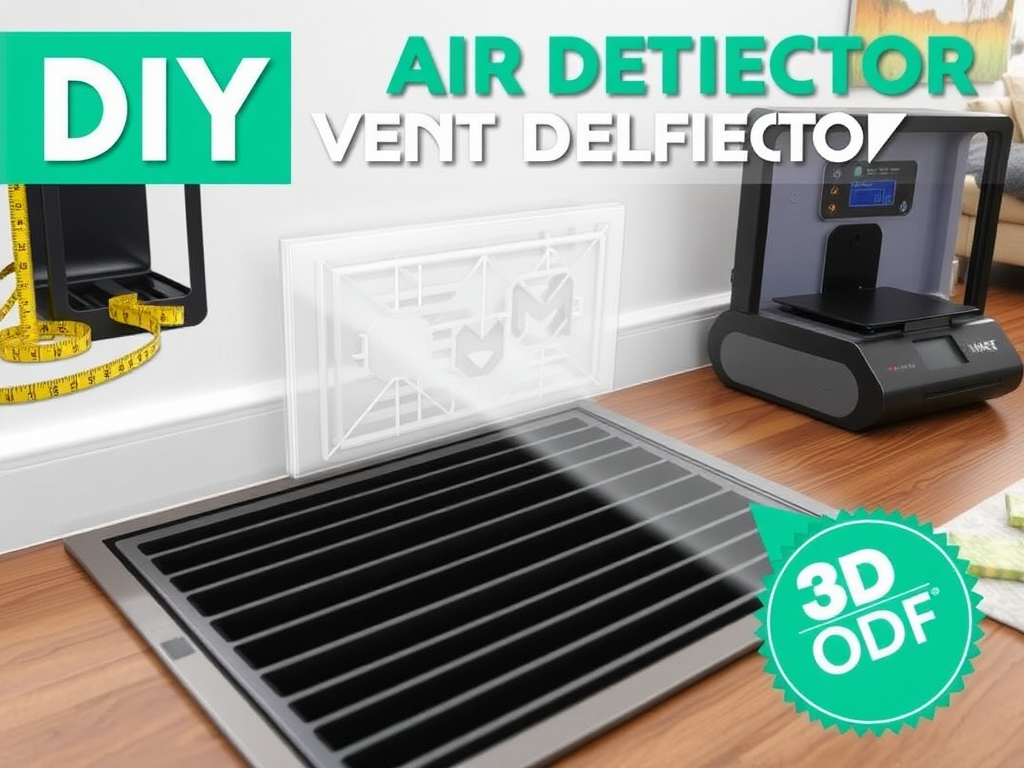
Why Print Air Vent Deflectors Using 3D?
Often, conventional vent deflectors have standard size and design. Every house is different, hence your deflector should be as well.
✅ Fit to Order
You may create a deflector to precisely fit the size of your floor register.
✅ Focused Airflow
Ensure effective distribution by directing warm or cool air away from walls or furnishings.
✅ Affordable
3D printing a deflector at home can cost less than $5 in filament when compared to $10–30 for store deflectors. Include aesthetic components, certain viewpoints, or clips lacking in commercial versions.
Pro Tip: Look at open-source models on sites like Thingiverse or Printables if 3D printing is new to you.
Important Elements to Include in a 3D-Printed Floor Vent Deflector
These essential qualities should be considered while creating or selecting a model to print:
- Curved or curved fins to direct airflow
- Stability provided by mounting clips or magnetic bases
- Open airflow channels (not blocking register too much)
- Durable filament, such as PLA+ or PETG (heat resistance is important)
- Low profile design should you walk over the vent
3D Printing a Floor Vent Air Deflector Slowly
1. Measure Your Floor Register Using a Tape Measure
Register length and width
If it is recessed, depth should be taken into account.
Typically: 4″x 10″, 4″x12″, 6″x10″.
2. Choose or Build a Model
Search “floor vent deflector” or “register airflow diverter” on: For a custom design, use Fusion 360 or Tinkercad instead.
3. Prepare the Print
Use ABS, PETG, or PLA filament to print. Print with 20–30% infill for strength. 0.2mm layer height is perfect for flat surfaces. Should the model have overhangs, supports could be necessary.
4. Set up the Deflector
Use adhesive pads, magnets, or screw mounts. Some designs enter the register directly without tools.
5. Look and Alter
Use your hand or a digital airflow meter to test redirection. Change angle or height marginally as needed.
Advantages of Using a 3D-Printed Air Vent Deflector
Optimized HVAC Functioning
You may direct air flow straight into living spaces, therefore enhancing comfort and lowering energy waste.
Reduce Energy Expenses
Eliminating inefficiencies helps your system to work less.
🏠 Safeguards Interior of Home
Direct air away from delicate furniture, drapes, or gadgets that could be harmed by direct airflow.
Works with Any Room Design
Select a hue or form that complements your decor; most store-bought deflectors cannot achieve this.
Actual Use Cases
- Under Couch Vent Blockage: Use a low-profile printed diverter to move air out from under a sofa.
- Children’s Rooms: For temperature-sensitive youngsters, personalize airflow.
- Home Offices: Direct heat or cold air toward your desk configuration.
- Pet Areas: Don’t blast air onto litter boxes or dog beds.
Read More
- Top PLA Filaments for Long-Lasting Home Prints
- How to Increase HVAC Airflow Without Major Expenditure
- How to 3D Print Functional Household Tools
READ MORE – Undergrowth GameLine: A Novel Gaming Experience
FAQs:
Could I 3D print a vent cover enhancing airflow?
Absolutely! A well-designed deflector lowers energy waste, enhances comfort, and guides air to preferred locations.
What material works best for printing vent deflectors?
Its toughness and heat resistance make PETG perfect. Especially in cooler areas or for temporary use, PLA also performs well.
Will a dual-extruder printer allow me to create these?
Not at all. For most deflector designs, a conventional single-nozzle printer works just well.
Will my HVAC system be harmed by a deflector?
Not if intended correctly. Just make sure it doesn’t totally impede ventilation. Redirecting air is safe; limiting it is not.
May I use a 3D-printed deflector on wall or ceiling vents?
Certainly, but the mounting system will change. You might have to change the angle or use PLA-like lightweight materials.
Conclusion:
A 3D-printed air vent deflector could be a tiny project that offers great comfort if you have ever battled obstructed floor registers or misdirected airflow. Custom-fit, inexpensive, and completely adjustable, it gives you control over airflow without having to contact an HVAC professional. From heating a cold corner of the room to protecting furniture from heat blasts, this easy improvement shows that 3D printing isn’t only for enjoyment—it’s useful as well.